Selecting a reliable partner among various mtb bike companies often comes down to a conflict between cost-efficiency and structural durability. For businesses and distributors, the challenge is not just finding a manufacturer, but finding one that balances industrial-grade welding with the specific ergonomics required for different age groups and skill levels.
The mountain bike sector has shifted from purely adult-centric high-performance gear toward a broader spectrum, including youth-oriented rugged cycles. This expansion requires manufacturers to implement rigorous quality control in frame geometry and material selection to ensure that safety standards, such as ISO and CE certifications, are met across all product lines.
By analyzing the technical foundations of frame fabrication and the strategic shift toward versatile kids' mountain bikes, we can establish a framework for evaluating the actual capabilities of modern bicycle manufacturers.

Material Foundations in Bike Fabrication

The choice of material defines the lifespan and safety of a bicycle. Many mtb bike companies rely on high-carbon steel for entry-level and youth mountain bikes due to its superior impact absorption and cost-effectiveness compared to aluminum or carbon fiber.
In industrial applications, using 1.2mm thick high-carbon steel ensures that the frame can withstand the erratic stresses typical of children's riding patterns. This material choice provides a necessary safety margin without making the bike excessively heavy for younger riders.
Technical Analysis of Frame Integrity
Structural integrity depends heavily on the welding process. TIG (Tungsten Inert Gas) welding is frequently employed in high-quality manufacturing to create strong, clean joints that prevent stress fractures. When evaluating a factory, the consistency of these welds is a primary indicator of long-term product reliability.
Beyond the frame, the braking system and wheel configuration must align with the user's age and height. For kids' bikes, integrating air tyres and a reliable brake line system is critical for safety, as these components manage the immediate physical response of the bike during sudden stops on uneven terrain.
Wheel sizes, typically ranging from 12" to 20" for youth models, are not arbitrary; they are engineered to maintain a specific center of gravity. This ensures that the rider remains stable, reducing the likelihood of tipping during low-speed maneuvers.
Balancing Cost and Quality Control
The tension between "cheap" and "high quality" is often resolved through systematic quality control. A professional manufacturer does not cut corners on safety but optimizes the assembly line to reduce waste and labor costs.
True quality in mass-produced bicycles is achieved when every unit undergoes full assembly and testing before packing, ensuring that ISO, CE, and ASTM standards are a reality rather than just a label.
By focusing on critical checkpoints—welding, painting, and loading—companies can maintain a low price point while ensuring the product does not fail under standard operating conditions.
Suitability Index for Youth MTB Gear
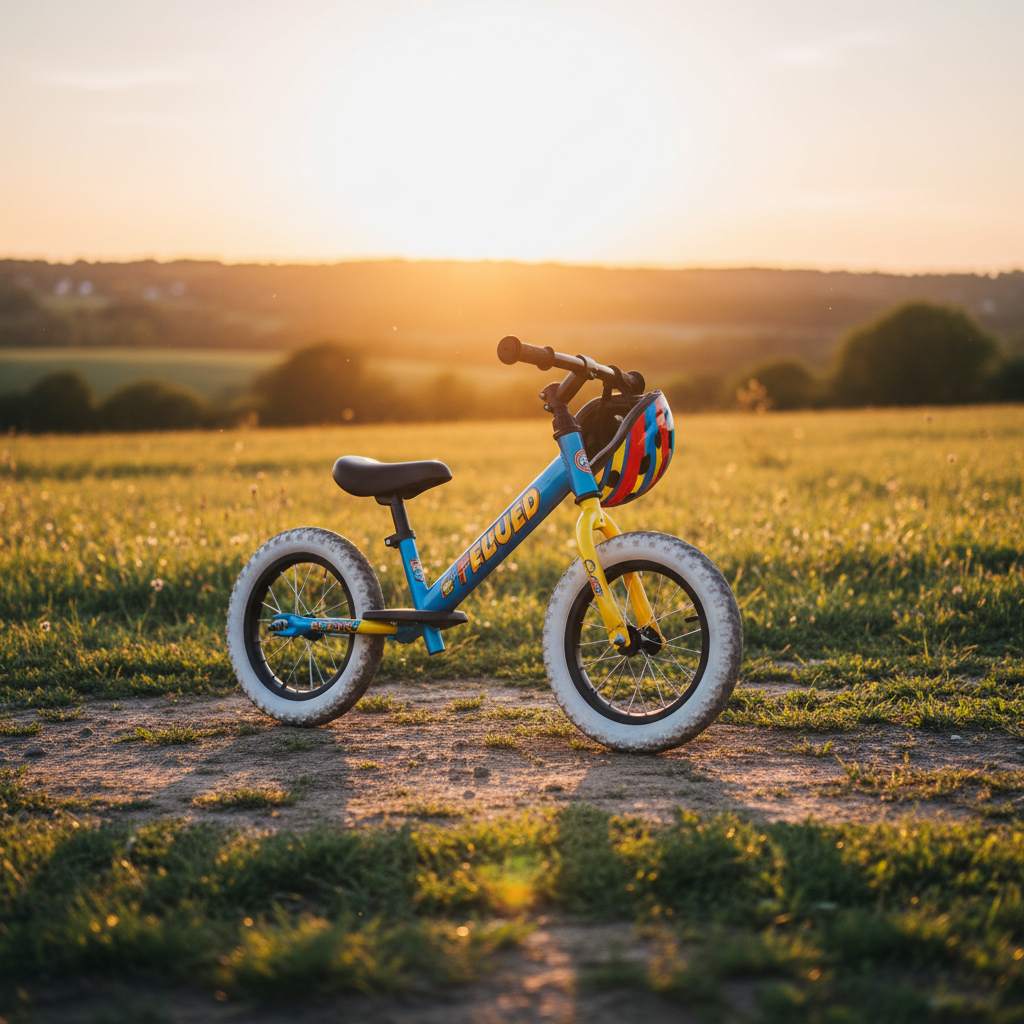
Different age groups require different technical specifications. A 3-year-old needs a balance bike to develop motor skills, whereas a 12-year-old requires a variable-speed mountain bike to handle steeper inclines and more technical trails.
The following index illustrates the relative importance of different technical factors based on the target user's age and experience level.
Figure 2. Technical Priority by User Segment
Practical Application Scenarios
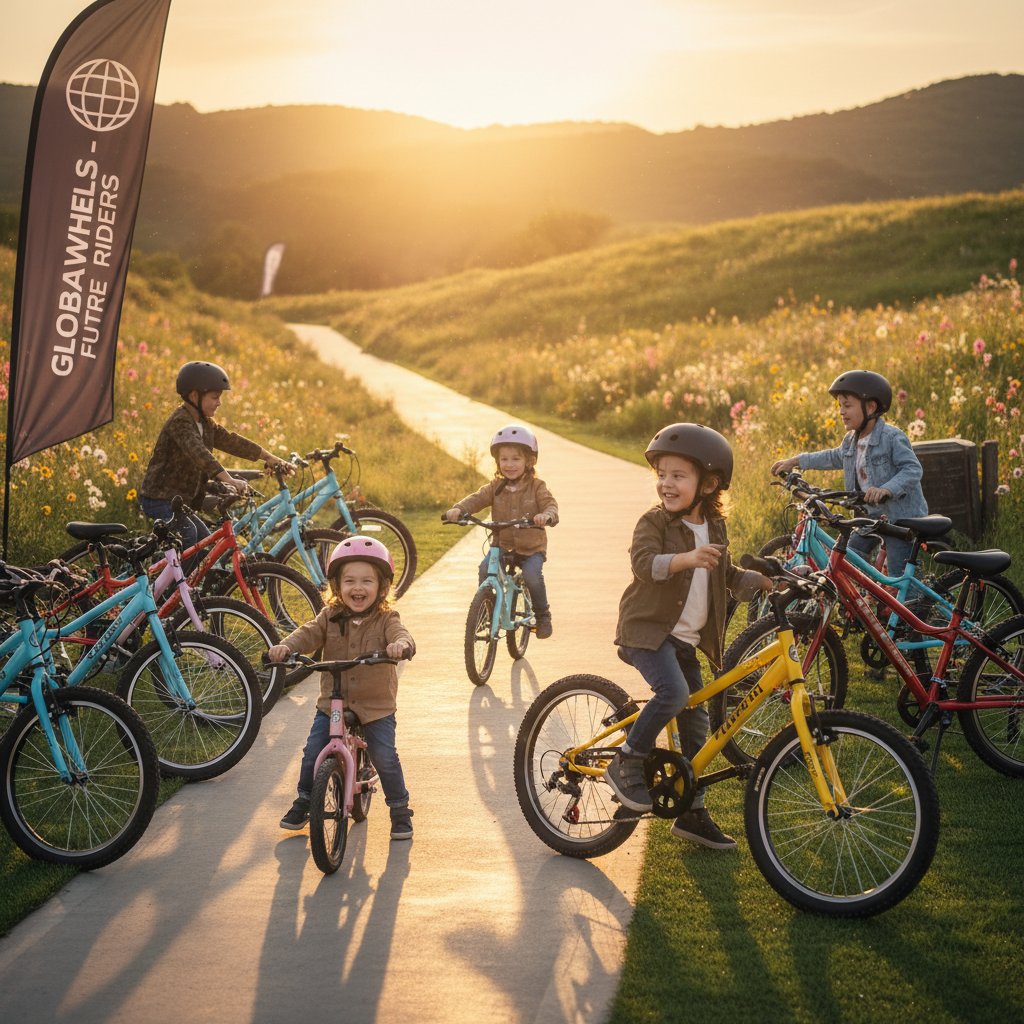
In a typical retail environment, distributors often seek "hot products" that combine aesthetic appeal with rugged functionality. For example, a 20-inch mountain bike with variable speeds is highly suitable for student sports, providing a bridge between simple play-bikes and professional adult gear.
Manufacturers like Xingtai Zhongzhou Bicycle Co., Ltd. address this by offering customized colors and OEM services, allowing brands to tailor the product to specific regional tastes while relying on a proven, ISO-certified assembly process.
Evolution of Kids' Cycle Design
The industry is moving toward multi-functional designs. We now see the rise of 4-in-1 tricycles and foldable scooters that grow with the child, reducing the frequency of replacement and increasing the overall value proposition for the parent.
Technological integration is also appearing in simpler forms, such as LED light-up wheels for scooters, which serve as both a fashion statement and a safety feature for visibility.
However, the core requirement remains the same: a safe, stable frame. Whether it is a balance bike for a toddler or a mountain bike for a teenager, the transition from training wheels to independent riding must be supported by a geometrically sound chassis.
Manufacturer Evaluation Framework
When auditing mtb bike companies, the focus should shift from price per unit to a total value assessment. This includes sample turnaround time, the ability to mix models in a single container, and the transparency of their warranty terms.
A factory that can provide a sample within 3-5 days and ship via DHL/UPS quickly demonstrates an efficient administrative and production workflow, which is crucial for maintaining lean inventory levels.
The following table provides a relative suitability framework for different bike categories based on technical requirements and user needs.
| Category | Primary Material | Key Safety Feature | Typical User Age |
|---|---|---|---|
| Balance Bike | High Carbon Steel | Adjustable Seat | 2-4 Years |
| Kids Tricycle | Steel / Plastic | Stability Base | 3-6 Years |
| Kids Scooter | Aluminum / Steel | PU Light Wheels | 3-8 Years |
| Junior MTB | TIG Welded Steel | Brake Line System | 6-10 Years |
| Teen MTB | Steel / Alloy | Variable Gears | 10-13 Years |
| Swing Car | Reinforced ABS | 360° Rotation | 4-10 Years |
Questions & Answers
High-carbon steel is often the preferred choice for youth mountain bikes. It provides an excellent balance of durability and shock absorption, which is essential for the unpredictable riding styles of children. While aluminum is lighter, high-carbon steel is more resistant to the types of impacts common in early learning stages and is more cost-effective for mass production.
Verify the manufacturer's certifications, such as ISO 9001, CE, and ASTM F963. Beyond paperwork, ask for details on their quality control process. A professional factory will have specific checkpoints for welding (TIG), painting, and a final full-assembly test for every unit before it is packed for shipment. Requesting a sample to check weld quality and finish is also highly recommended.
Yes, most large-scale manufacturers offer OEM services. This allows you to customize colors, logos, and certain components to match your brand identity. When engaging in OEM, it is important to ensure that the customization does not bypass the factory's standard safety testing and that all custom parts still meet international safety certifications.
A balance bike has no pedals and is designed to teach toddlers how to balance and steer, which is the hardest part of riding a bike. A tricycle provides three points of contact for absolute stability, focusing on pedal movement and coordination. Many parents start with a balance bike to make the transition to a pedal bike much faster and more intuitive.
For children, a braking system must be responsive yet easy to operate without requiring excessive hand strength. Look for integrated brake lines and well-adjusted calipers. For youth mountain bikes, ensuring the brakes are compatible with the rim material (usually steel) is crucial to prevent premature wear and ensure consistent stopping power on varied terrain.
Most factories have a Minimum Order Quantity (MOQ) per model. However, many flexible manufacturers allow you to mix different models in one container as long as the individual MOQ for each model is met. Always clarify shipping lead times—typically 3-5 days for samples and several weeks for bulk orders—and verify the shipping method (e.g., DHL/UPS for samples) to avoid delays.
Final Thoughts
Navigating the landscape of mtb bike companies requires a focus on the intersection of material science and quality assurance. Whether sourcing high-carbon steel frames for youth cycles or multi-functional scooters, the priority must always remain on certified safety and structural integrity.
By implementing a rigorous evaluation framework—prioritizing TIG welding quality, ISO certifications, and efficient sampling—businesses can secure a supply chain that delivers both value and reliability.


 English
 Afrikaans
 Albanian
 Amharic
 Arabic
 Armenian
 Azerbaijani
 Basque
 Belarusian
 Bengali
 Bosnian
 Bulgarian
 Catalan
 Cebuano
 Corsican
 Croatian
 Czech
 Danish
 Dutch
 Esperanto
 Estonian
 Finnish
 French
 Frisian
 Galician
 Georgian
 German
 Greek
 Gujarati
 Haitian Creole
 Hausa
 Hawaiian
 Hebrew
 Hindi
 Miao
 Hungarian
 Icelandic
 Igbo
 Indonesian
 Irish
 Italian
 Japanese
 Javanese
 Kannada
 Kazakh
 Khmer
 Rwandese
 Korean
 Kurdish
 Kyrgyz
 Lao
 Latin
 Latvian
 Lithuanian
 Luxembourgish
 Macedonian
 Malgashi
 Malay
 Malayalam
 Maltese
 Maori
 Marathi
 Mongolian
 Myanmar
 Nepali
 Norwegian
 Norwegian
 Occitan
 Pashto
 Persian
 Polish
 Portuguese
 Punjabi
 Romanian
 Russian
 Samoan
 Scottish Gaelic
 Serbian
 Sesotho
 Shona
 Sindhi
 Sinhala
 Slovak
 Slovenian
 Somali
 Spanish
 Sundanese
 Swahili
 Swedish
 Tagalog
 Tajik
 Tamil
 Tatar
 Telugu
 Thai
 Turkish
 Turkmen
 Ukrainian
 Urdu
 Uighur
 Uzbek
 Vietnamese
 Welsh
 Bantu
 Yiddish
 Yoruba
 Zulu