Determining the ideal childrens bikes price involves more than just comparing a price tag; it requires an understanding of the intersection between material durability, safety certifications, and the developmental stage of the child. For procurement managers and parents alike, the challenge lies in balancing budget constraints with the uncompromising need for structural integrity and user safety.
In the current transport equipment manufacturing landscape, the cost of kids' bicycles is driven by a variety of factors, from the grade of PP plastic used in toddler ride-ons to the precision of welding in larger youth mountain bikes. Understanding these drivers allows for more strategic purchasing and ensures that the chosen product provides genuine value over its lifecycle.
This analysis explores the technical and commercial variables that influence the pricing of children's cycling products, offering a framework for evaluating quality markers such as CE, EN, and ISO certifications against market costs to ensure a safe and sustainable investment.

Analyzing the Cost Drivers of Children's Bicycles

The variance in childrens bikes price is primarily rooted in the manufacturing process and the raw materials employed. For early-stage products like Baby Swing Cars or Balance Bikes, the use of high-grade, non-toxic PP plastic is a significant cost factor, as it must support substantial weight limits—up to 220kg in professional-grade models—while remaining lightweight for the child.
Beyond materials, labor costs related to assembly and quality control play a pivotal role. Products that undergo full assembly and rigorous testing before shipment, rather than simple bulk packing, typically command a higher price point but offer significantly lower failure rates and higher safety margins.
Finally, certification compliance adds a layer of cost. Achieving ISO 9001-2000, CE, and ASTM F963 certifications requires stringent auditing and material testing, which increases the initial production cost but ensures the product can be legally and safely exported to global markets including the EU and USA.
Essential Quality Indicators for Value Assessment
When evaluating a product, the technical specifications should be the primary focus rather than the absolute price. Key markers include the precision of welding in frames and the quality of the painting process, both of which prevent premature corrosion and structural fatigue in youth mountain bikes.
Safety is non-negotiable in this industry. The presence of CPSIA certification, for instance, ensures that lead and phthalate levels are within safe limits, a critical requirement for products targeting children aged 1-6. This regulatory compliance is a primary differentiator between low-end generic imports and professional manufacturer offerings.
Additionally, the versatility of the product—such as the 4-in-1 functionality of modern tricycles—adds value by extending the usable age range of the bike, effectively lowering the cost-per-year of ownership for the end consumer.
Application Scenarios and Product Suitability
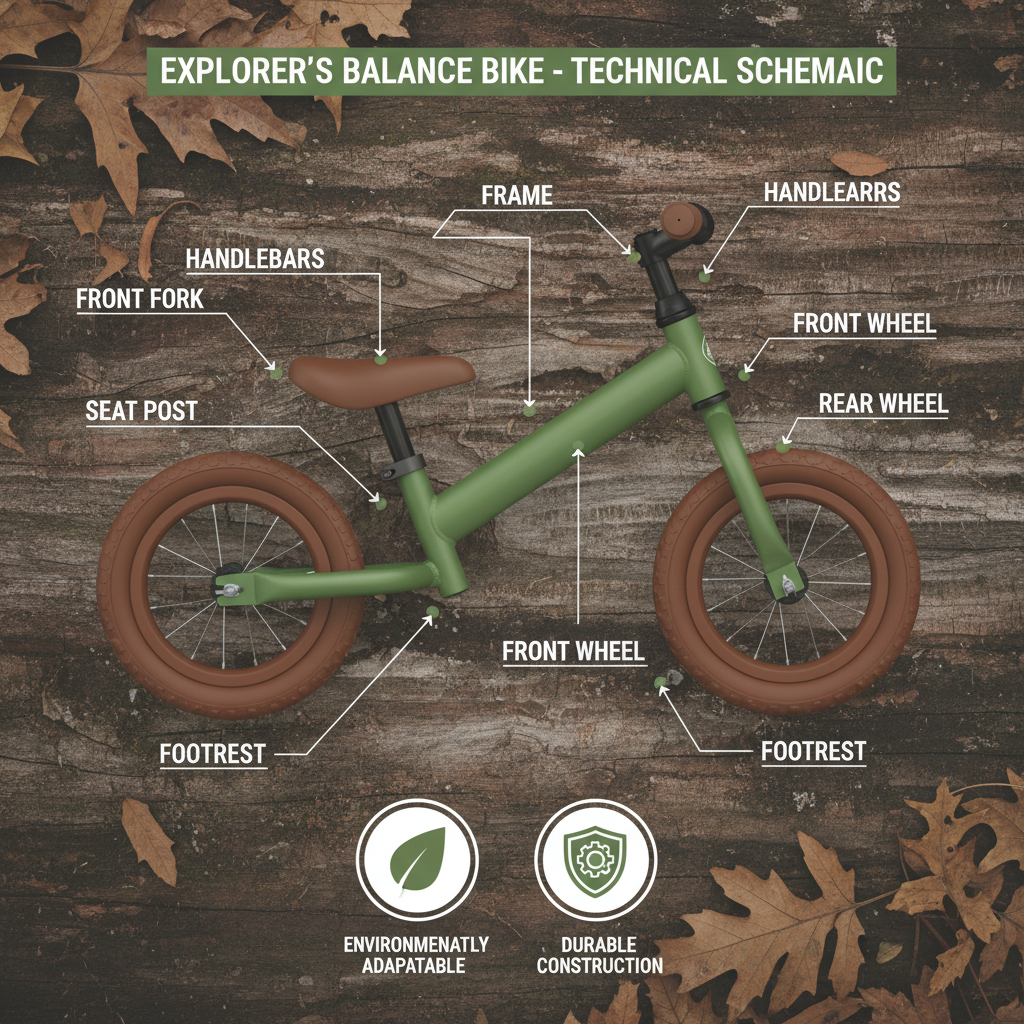
Matching the product category to the specific developmental need of the child is essential for optimizing the investment. For toddlers (ages 1-3), balance bikes and mini bikes are the ideal entry point, focusing on motor skill development and stability without the complexity of pedals.
As children transition to ages 3-6, the demand shifts toward Kids Scooters and Tricycles. These products emphasize coordination and active play, often featuring light-up wheels or multifunctional folding mechanisms for urban portability, which allows parents to integrate cycling into daily commutes.
For older children (ages 6-13), the transition to 18, 20, or 22-inch mountain bikes becomes necessary. These products introduce variable speed gears and more robust frames to accommodate sports and student activities, shifting the value proposition toward durability and performance benchmarks.
Comparative Performance and Manufacturing Benchmarks
Comparing the performance of budget-grade equipment versus factory-direct certified products reveals a clear gap in longevity and safety. Professional manufacturing lines implement a "full assembly and test" protocol, which drastically reduces the risk of mechanical failure during the first 100 hours of use.
The following data illustrates the relative performance scores across key dimensions, comparing industry average budget bikes with those produced under rigorous ISO and CE quality controls.
childrens bikes price Performance Metrics
As shown, certified products demonstrate significantly higher scores in safety and durability. While the initial cost may be higher, the reduction in maintenance requirements and the extended lifespan of the components provide a superior return on investment for the buyer.
Strategic Procurement and Supplier Evaluation
For B2B buyers, the selection of a supplier depends on the ability to balance MOQ (Minimum Order Quantity) with customization options. A factory-direct model is often preferred because it removes the trading company margin and allows for direct oversight of the quality control process in welding and painting.
Evaluating warranty terms is another critical step. Since different products—from simple balance bikes to complex variable-speed mountain bikes—have different wear-and-tear profiles, a supplier offering tailored warranty terms for specific components demonstrates a deeper understanding of product lifecycle and quality.
Furthermore, the ability to mix different models in a single container, provided the MOQ per model is met, allows distributors to diversify their product range and respond more flexibly to local market demand without inflating inventory costs.
Evolution of Materials in Youth Transport Equipment
The industry is seeing a shift toward higher-performance polymers and lightweight alloys. The integration of high-strength PP plastic in ride-on toys not only increases the weight limit but also enhances the impact resistance, making the products safer for active children.
In the scooter segment, the adoption of PU light-up wheels has moved from a novelty to a standard feature. These materials offer a better balance between grip and smoothness on urban surfaces, reducing the frequency of wheel replacements and improving the overall user experience.
Future trends may involve more sustainable materials and modular designs that allow parents to upgrade components as the child grows, potentially reducing the long-term cost of replacing entire bicycles every two years.
Selection Guide Across Diverse Product Categories
Selecting the right product requires a comparison of technical specifications against the intended use case. Whether the goal is early motor skill development or active student sports, the following matrix provides a decision-making framework.
The dimensions below evaluate common categories based on their primary value drivers and typical technical requirements for safe operation.
| Product Category | Primary Material | Target Age Group | Key Evaluation Metric |
|---|---|---|---|
| Balance Bike | Steel/Alloy | 1-3 Years | Weight & Stability |
| Baby Swing Car | High-Grade PP | 1-6 Years | Weight Limit (220kg) |
| Kids Scooter | Alloy/PU Wheels | 3-6 Years | Foldability & Grip |
| Kids Tricycle | Mixed Steel/PP | 2-5 Years | Multifunctionality |
| Youth Mountain Bike | Reinforced Steel | 6-13 Years | Gear Precision |
| Baby Mini Bike | Polymer/Plastic | 1-3 Years | Non-toxic Material |
By aligning these metrics with the budget, buyers can avoid overpaying for unnecessary features while ensuring that safety and durability standards are never compromised.
Frequently Asked Questions
Conclusion
Navigating the complexities of childrens bikes price requires a shift in perspective from seeking the lowest cost to identifying the highest value. By focusing on material certifications, manufacturing standards, and the specific developmental needs of the child, buyers can secure products that are not only affordable but fundamentally safe.
For those seeking professional-grade children's transport equipment that meets ISO and CE standards, the resources available at www.zhongzhoubike.com provide a comprehensive look at how quality manufacturing translates into long-term product reliability.



 English
 Afrikaans
 Albanian
 Amharic
 Arabic
 Armenian
 Azerbaijani
 Basque
 Belarusian
 Bengali
 Bosnian
 Bulgarian
 Catalan
 Cebuano
 Corsican
 Croatian
 Czech
 Danish
 Dutch
 Esperanto
 Estonian
 Finnish
 French
 Frisian
 Galician
 Georgian
 German
 Greek
 Gujarati
 Haitian Creole
 Hausa
 Hawaiian
 Hebrew
 Hindi
 Miao
 Hungarian
 Icelandic
 Igbo
 Indonesian
 Irish
 Italian
 Japanese
 Javanese
 Kannada
 Kazakh
 Khmer
 Rwandese
 Korean
 Kurdish
 Kyrgyz
 Lao
 Latin
 Latvian
 Lithuanian
 Luxembourgish
 Macedonian
 Malgashi
 Malay
 Malayalam
 Maltese
 Maori
 Marathi
 Mongolian
 Myanmar
 Nepali
 Norwegian
 Norwegian
 Occitan
 Pashto
 Persian
 Polish
 Portuguese
 Punjabi
 Romanian
 Russian
 Samoan
 Scottish Gaelic
 Serbian
 Sesotho
 Shona
 Sindhi
 Sinhala
 Slovak
 Slovenian
 Somali
 Spanish
 Sundanese
 Swahili
 Swedish
 Tagalog
 Tajik
 Tamil
 Tatar
 Telugu
 Thai
 Turkish
 Turkmen
 Ukrainian
 Urdu
 Uighur
 Uzbek
 Vietnamese
 Welsh
 Bantu
 Yiddish
 Yoruba
 Zulu