Choosing the right kid's bikes is more than just a purchasing decision; it is an investment in a child's physical development, coordination, and lifelong relationship with outdoor activity. In an era dominated by digital screens, these cycles serve as a critical bridge to the physical world, fostering independence and confidence from a very young age.
Globally, the demand for specialized children's mobility solutions has surged as parents prioritize active play and sustainable transport. From the initial balance phase to the mastery of geared pedaling, the evolution of kid's bikes reflects broader trends in ergonomics, safety engineering, and material science designed specifically for smaller frames.
Understanding the nuances of frame geometry, weight distribution, and safety certifications ensures that children not only stay safe but also enjoy a seamless learning curve. By matching the right product—whether a balance bike or a traditional pedal cycle—to the child's developmental stage, we can maximize the health and psychological benefits of early childhood mobility.
Global Industry Context of Kid's Bikes
The global market for kid's bikes has seen a significant transformation, shifting from simple toy-like constructions to engineered sporting equipment. According to industry trends aligned with ISO safety standards, there is a growing emphasis on "lightweighting"—reducing the overall mass of the bike to ensure that the child's power-to-weight ratio allows for easier handling and fewer accidents.
This industrial shift is driven by a global push toward sustainable urban mobility and a parental desire to combat sedentary lifestyles. As cities implement more "car-free" zones and green corridors, the role of children's transport has evolved from a backyard pastime to a functional tool for short-distance commuting and social interaction.
Defining Modern Kid's Bikes and Mobility
In professional terms, kid's bikes are specialized transportation vehicles designed with strict adherence to pediatric ergonomics. Unlike adult bikes, these are not simply scaled-down versions of larger frames; they require unique geometry to accommodate a child's center of gravity, shorter reach, and developing motor skills.
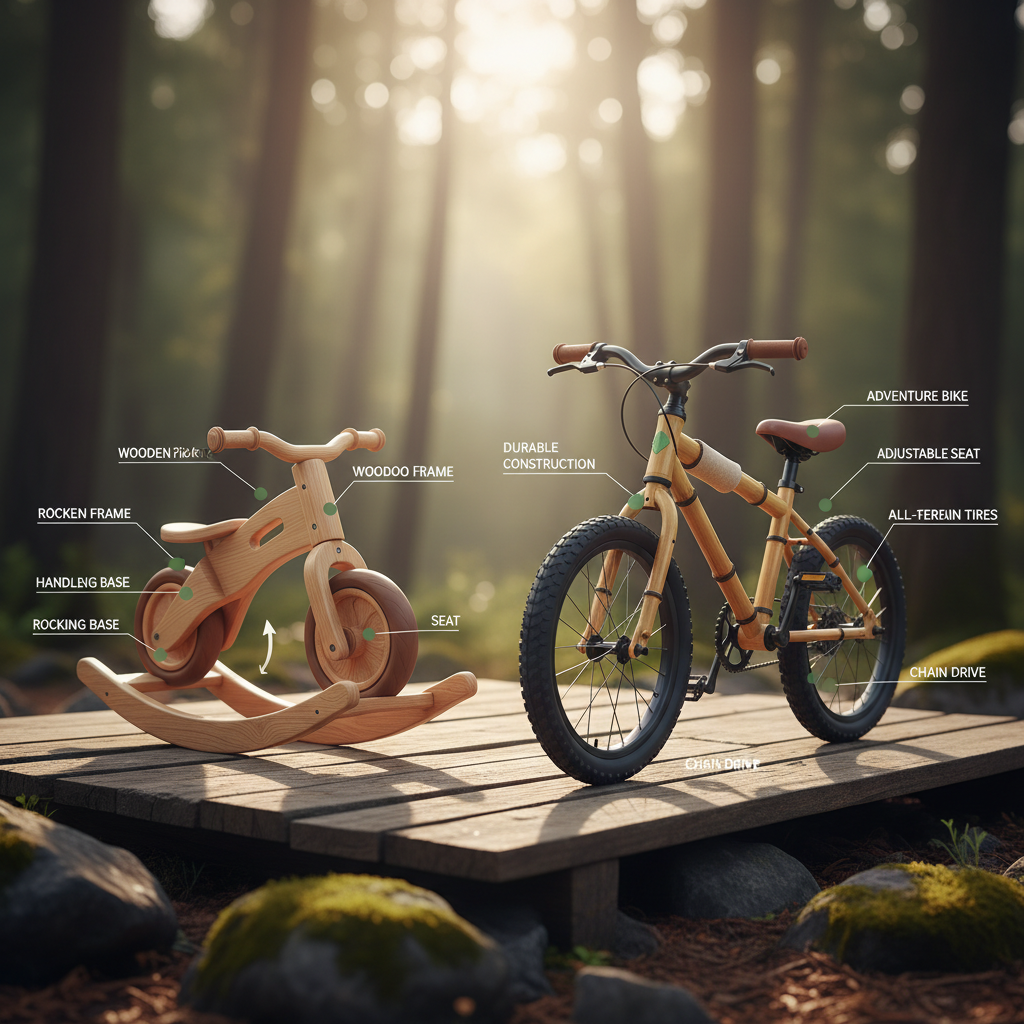
Modern definitions encompass a wide spectrum of mobility tools, including Balance Bikes (which teach equilibrium without pedals), Kids Tricycles (for early stability), and traditional pedal bikes with training wheels. This progression allows for a modular approach to learning, where each stage of the product supports a specific neurological and physical milestone.
The connection to modern industry lies in the integration of advanced materials—such as aircraft-grade aluminum and high-impact polymers—which ensure that these tools are not only safe but also sustainable. This evolution reflects a humanitarian need to promote inclusive physical activity, ensuring children of all ability levels have access to reliable mobility.
Core Components for Safety and Durability
Durability is the cornerstone of high-quality kid's bikes. Because children are prone to collisions and rough handling, the use of reinforced welds and scratch-resistant powder coatings is essential. A durable frame prevents structural fatigue and ensures that the bike can be passed down to siblings, increasing its overall lifecycle value.
Safety components are where technical precision meets practical application. Modern kid's bikes feature enclosed chain guards to prevent clothing entanglement and ergonomically designed brake levers that require minimal hand strength to activate. These features are critical in reducing the risk of injury during the steep learning curve of early cycling.
Scalability and adjustability allow a single bike to grow with the child. Adjustable seat posts and handlebar stems ensure that the rider maintains a healthy posture, preventing joint strain. By focusing on these adjustable touchpoints, manufacturers can extend the usability of the product, reducing waste and providing better cost efficiency for the consumer.
Performance Metrics Across Bike Categories
Evaluating the effectiveness of different kid's bikes requires a look at specific performance metrics. For instance, a balance bike is rated primarily on its weight and stability, whereas a pedal bike for older children is judged on its braking efficiency and gear transition smoothness.
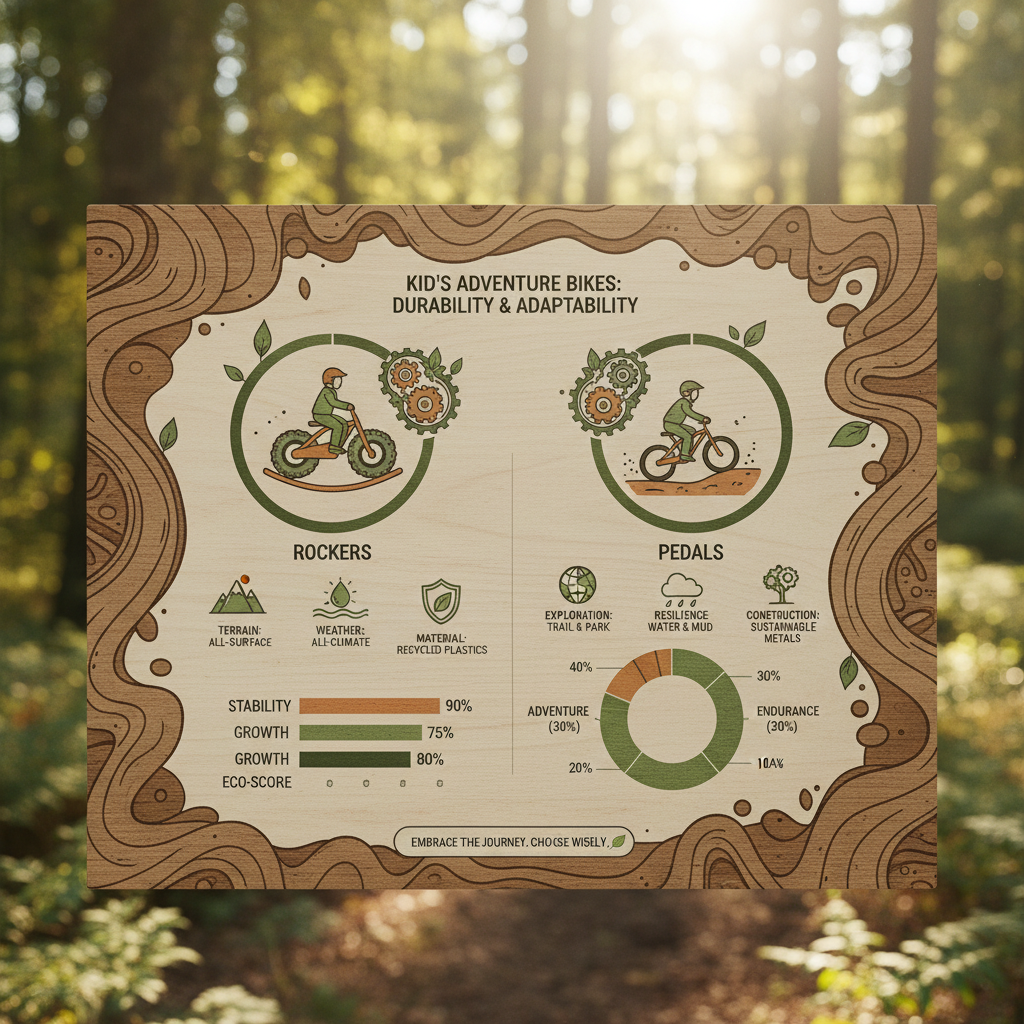
By analyzing these categories, we can see which products best serve specific developmental needs. The following data illustrates the comparative strengths of various types of children's rides based on stability, ease of learning, and long-term utility.
Comparative Performance of Kid's Bikes Categories
Global Applications and Use Cases
The application of kid's bikes varies significantly across different global regions. In European cities like Amsterdam or Copenhagen, children's bikes are integrated into the urban transport fabric, often featuring cargo baskets and safety flags, serving as a primary means of getting to school. This promotes early autonomy and a culture of environmental consciousness.
In contrast, in North American suburban contexts, these bikes are often used for recreational purposes in parks and driveways, where the focus is on athletic development and leisure. Furthermore, in some developing regions, durable kids' mobility solutions are used in community-led health programs to encourage children to visit local clinics or schools, proving that a simple cycle can have a profound social impact.
Long-Term Value and Developmental Benefits
Investing in high-quality kid's bikes yields tangible cognitive and physical benefits. The act of balancing and steering engages the vestibular system, enhancing the child's spatial awareness and proprioception. This physical mastery translates into increased self-esteem and a willingness to take calculated risks—a key trait for cognitive growth.
From a logical perspective, the long-term value is found in the reduction of future healthcare costs. By establishing a habit of active transport early, children are less likely to suffer from childhood obesity and respiratory issues. The emotional angle is equally strong: the memory of learning to ride a bike is often a cornerstone of a child's sense of accomplishment and independence.
Sustainability also plays a major role. A well-built bike made from recyclable aluminum reduces the environmental footprint compared to cheap, plastic-heavy alternatives that end up in landfills within a year. This teaches children the value of quality over quantity and the importance of maintaining their equipment.
Future Innovations in Children's Cycling
The future of kid's bikes is leaning heavily toward smart integration and eco-friendly materials. We are seeing the emergence of "Smart Safety" systems, where bikes are equipped with low-energy Bluetooth beacons or integrated LED lighting that automatically activates based on ambient light sensors, ensuring visibility in all conditions.
Material science is also evolving, with the introduction of bio-composites and recycled carbon fibers to further reduce weight without compromising strength. Additionally, the rise of electric-assist "trainer" bikes is helping children with different physical abilities experience the joy of cycling, making the sport more inclusive than ever before.
Digital transformation is also touching the industry through AR-guided learning apps that help parents teach their children how to ride by providing real-time tips on posture and braking. This blending of the digital and physical worlds ensures that the learning process is engaging and data-driven.
Comparative Analysis of Kid's Bike Evolution and Material Trends
|
Innovation Era
|
Primary Material
|
Safety Focus
|
Developmental Goal
|
| Traditional |
Heavy Steel |
Basic Stability |
Basic Movement |
| Modern Standard |
Aluminum Alloy |
Ergonomic Braking |
Balance Mastery |
| Eco-Conscious |
Recycled Polymers |
Non-toxic Coatings |
Sustainable Habits |
| Smart Era |
Magnesium Alloys |
IoT Connectivity |
Safe Exploration |
| Inclusive Design |
Custom Composites |
Adaptive Seating |
Universal Access |
| Next-Gen |
Bio-Fiber Carbon |
AI Impact Sensing |
Peak Performance |
FAQS
The best way to determine size is by measuring the child's inseam rather than their total height. For beginners, ensure the child can touch the ground with both feet while sitting on the saddle. Refer to the manufacturer's wheel size chart (e.g., 12", 16", 20") to match the frame to the child's current growth stage to ensure safe handling and comfort.
Generally, yes. Balance bikes teach the most difficult part of cycling—equilibrium—first. Once a child masters balancing, transitioning to a pedal bike is often seamless and happens much faster. Training wheels can sometimes create a "false sense of stability" and delay the development of the core muscles needed for actual balancing.
Look for certifications such as ISO 8127 or ASTM F963. These standards ensure that the bike has undergone rigorous testing for structural integrity, non-toxic paint materials, and the absence of sharp edges or pinch points. Always verify that the brakes are responsive and the chain guard is fully enclosed.
A basic "ABC" check (Air, Brakes, Chain) should be done weekly. Ensure tires are properly inflated, brakes grip firmly without slipping, and the chain is lubricated. A professional tune-up every six months is recommended, especially if the bike is used daily or in wet conditions, to check for loose bolts or frame stress.
Yes, it is crucial. A heavy steel bike can be intimidating for a child and harder to maneuver, increasing the likelihood of tips and falls. Lightweight frames allow children to maintain control more easily, build confidence faster, and reduce the physical effort required to start and stop, making the entire experience more enjoyable.
Absolutely. Many manufacturers now offer adaptive options, such as specialized pedals, supportive seating, or stabilized frames for those with motor coordination challenges. Consulting with a pediatric therapist can help you choose a modified bike that provides the necessary support while still offering the freedom of mobility.
Conclusion
In summary, the selection and use of kid's bikes extend far beyond simple recreation; they are pivotal tools for physical development, mental confidence, and environmental stewardship. By focusing on ergonomic design, safety certifications, and the correct developmental progression—from balance to pedal—parents can ensure a safe and rewarding experience for their children.
As we look toward a future of smarter materials and inclusive designs, the importance of active childhood mobility only grows. We encourage parents and educators to prioritize quality and safety to foster a lifelong love for cycling. To explore our full range of professionally engineered children's mobility solutions, visit our website: www.zhongzhoubike.com

 English
  Afrikaans
  Albanian
  Amharic
  Arabic
  Armenian
  Azerbaijani
  Basque
  Belarusian
  Bengali
  Bosnian
  Bulgarian
  Catalan
  Cebuano
  Corsican
  Croatian
  Czech
Czech  Danish
  Dutch
Dutch  Esperanto
  Estonian
  Finnish
  French
  Frisian
  Galician
  Georgian
  German
  Greek
Greek  Gujarati
  Haitian Creole
  Hausa
Hausa  Hawaiian
  Hebrew
  Hindi
Hindi  Miao
Miao  Hungarian
  Icelandic
  Igbo
Igbo  Indonesian
  Irish
Irish  Italian
  Japanese
  Javanese
  Kannada
  Kazakh
  Khmer
Khmer  Rwandese
  Korean
  Kurdish
  Kyrgyz
  Lao
Lao  Latin
Latin  Latvian
  Lithuanian
  Luxembourgish
  Macedonian
  Malgashi
  Malay
Malay  Malayalam
  Maltese
  Maori
Maori  Marathi
  Mongolian
  Myanmar
  Nepali
  Norwegian
  Norwegian
  Occitan
  Pashto
  Persian
  Polish
  Portuguese
  Punjabi
  Romanian
  Russian
  Samoan
  Scottish Gaelic
  Serbian
  Sesotho
  Shona
Shona  Sindhi
  Sinhala
  Slovak
  Slovenian
  Somali
  Spanish
  Sundanese
  Swahili
  Swedish
  Tagalog
  Tajik
Tajik  Tamil
Tamil  Tatar
Tatar  Telugu
  Thai
Thai  Turkish
  Turkmen
  Ukrainian
  Urdu
Urdu  Uighur
  Uzbek
Uzbek  Vietnamese
  Welsh
Welsh  Bantu
Bantu  Yiddish
  Yoruba
  Zulu
Zulu