Introducing a kid road bike is more than just gifting a toy; it is about introducing a child to the world of endurance, discipline, and the thrill of speed. Unlike standard bicycles, these specialized machines are engineered to mirror adult road bikes, offering a lightweight frame and aerodynamic posture that allow young riders to experience the true essence of cycling. In an era where sedentary lifestyles are becoming a global concern, encouraging children to take to the pavement fosters physical health and a lifelong passion for outdoor exploration.
From a global manufacturing perspective, the evolution of the kid road bike reflects a sophisticated shift in materials science and ergonomic design. By integrating high-grade aluminum alloys and carbon-fiber composites into smaller frames, the industry has managed to reduce weight without compromising structural integrity. This precision engineering ensures that children can handle the bike with confidence, reducing the risk of instability while maximizing the efficiency of every pedal stroke.
Understanding the nuances of these bikes is essential for parents and educators who want to bridge the gap between casual riding and competitive cycling. Whether it is the geometry of the drop bars or the specific gearing ratios designed for smaller legs, every detail serves a purpose. By investing in a high-quality kid road bike, we are providing children with the tools to build resilience, improve cardiovascular health, and develop a deep sense of independence.
Global Relevance of Kid Road Bikes
On a global scale, the demand for the kid road bike has surged as urban centers in Europe and North America integrate more cycling-friendly infrastructure. According to industry trends aligned with ISO safety standards, there is a growing emphasis on "scaling down" professional equipment rather than simply creating "toys." This shift is driven by a desire to introduce children to sustainable transport early in life, aligning with UN sustainable development goals regarding health and reduced carbon emissions.
However, the primary challenge has always been the balance between performance and safety. Traditional children's bikes often lacked the efficiency required for longer distances, while adult road bikes were far too heavy and cumbersome. The emergence of specialized youth road frames addresses this gap, providing a legitimate entry point for aspiring young athletes to engage in sport-specific training without sacrificing their safety or comfort.
Defining the Modern Kid Road Bike
A kid road bike is a high-performance bicycle specifically designed for children, characterized by its thin tires, lightweight frame, and typically, drop handlebars. Unlike mountain bikes or cruisers, these are optimized for paved surfaces, focusing on minimizing rolling resistance and maximizing speed. They are not merely smaller versions of adult bikes; they are ergonomically tailored to the shorter reach and lower center of gravity of a child.
In the context of modern manufacturing, these bikes represent a convergence of sporting needs and humanitarian health goals. By providing a tool that makes exercise feel like an achievement rather than a chore, the industry helps combat childhood obesity. The design philosophy emphasizes "agility" and "efficiency," ensuring that a child's limited power output is translated directly into forward motion.
Furthermore, the connection to modern industry is seen in the adoption of "Growth-Ready" geometries. Many manufacturers now implement adjustable components that allow the kid road bike to grow with the child, extending the product's lifecycle and reducing waste, which reflects a broader commitment to circular economy principles in the transportation equipment sector.
Core Components and Engineering Factors
Durability is the cornerstone of any kid road bike. Using 6061 aluminum alloys allows the frame to remain stiff enough for power transfer while being light enough for a child to lift. This ensures that the bike can withstand the inevitable bumps and drops of childhood while maintaining the high-performance characteristics of a road racer.
Scalability and Ergonomics are critical. The reach of the handlebars on a kid road bike must be carefully calibrated to prevent excessive strain on the lower back. Specialized "compact" geometries are employed to ensure the rider can maintain an aerodynamic position without sacrificing control or visibility.
Cost Efficiency and Component Integration play a huge role. By optimizing the drivetrain—often using a simplified gear range—manufacturers can provide a smooth riding experience that isn't overly complex for a child to operate. This balance of professional-grade components and intuitive interfaces makes the kid road bike accessible to a wider range of families.
Practical Applications and Use Cases
In real-world contexts, the kid road bike is used across various scenarios, from competitive youth racing leagues in Belgium to weekend family fitness rides in California. In regions with high cycling cultures, these bikes serve as the primary vehicle for introducing children to the concepts of cadence, drafting, and endurance. They are often used by youth cycling clubs to train the next generation of professional athletes.
Beyond competition, these bikes are increasingly used in "Safe Routes to School" initiatives in urban industrial zones. By providing a fast and efficient means of transport, they encourage children to avoid motorized transport for short distances. For example, in several European cities, specialized youth road bikes are integrated into community health programs to promote active commuting among adolescents.
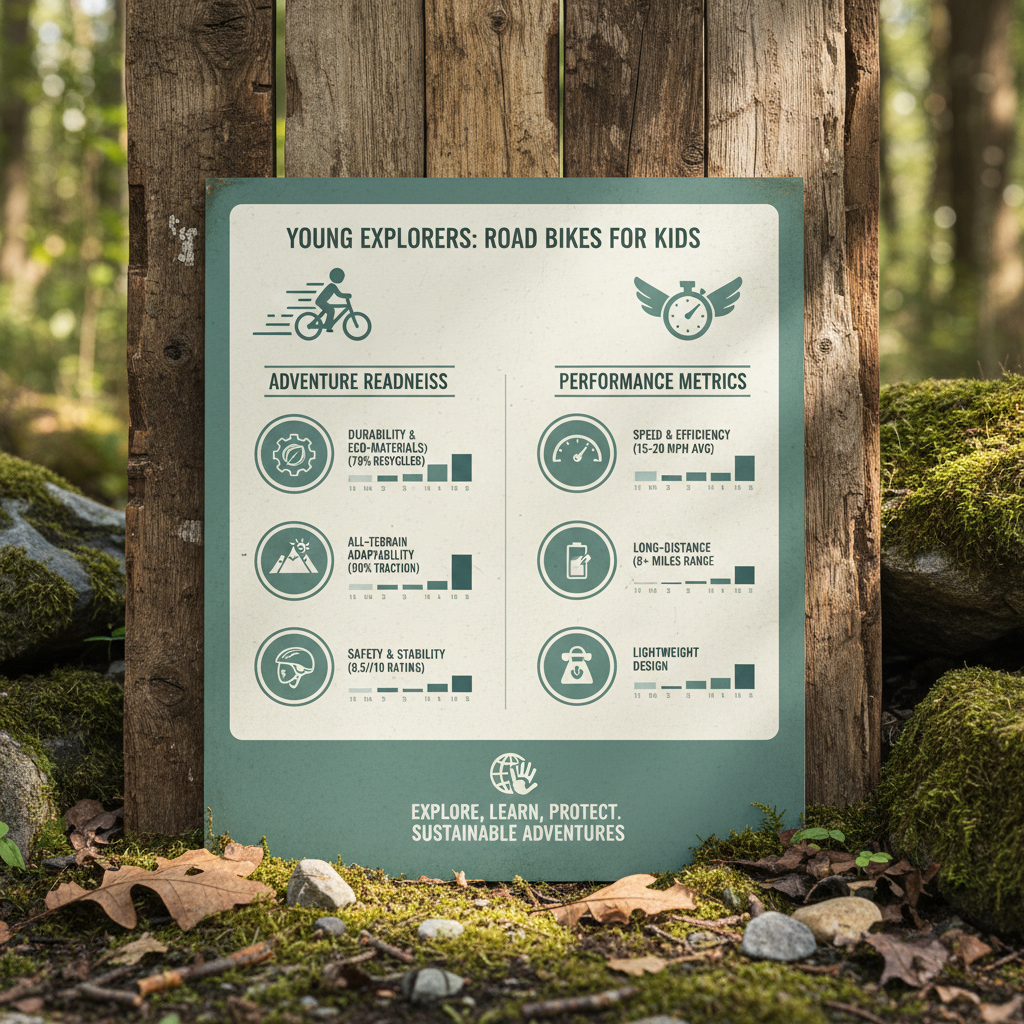
Performance Metrics of Kid Road Bike Categories
Long-Term Value and Developmental Benefits
The tangible benefits of a kid road bike extend far beyond physical fitness. Logically, the efficiency of the machine teaches children about mechanics and physics—how gearing affects effort and how aerodynamics influence speed. Socially, it allows children to participate in group rides, fostering a sense of community and shared achievement that builds immense self-confidence.
Emotionally, the mastery of a road bike provides a sense of dignity and autonomy. Transitioning from a balance bike to a high-speed road machine is a rite of passage that signals growth and capability. By trusting a child with a piece of "real" sporting equipment, parents signal their trust in the child's maturity and skill, which is a powerful catalyst for psychological development and a positive self-image.
Future Innovations in Youth Cycling
The future of the kid road bike is being shaped by digital transformation and sustainable materials. We are seeing the integration of "Smart Hubs" that can track a child's cadence and heart rate, syncing with apps to provide educational feedback on their riding form. This gamification of cycling makes the learning curve more engaging for a generation born into the digital age.
Material science is also evolving, with the introduction of bio-composites and recycled carbon fibers. These new materials aim to make the kid road bike not only lighter but also more eco-friendly, reducing the environmental footprint of the manufacturing process. We anticipate a move toward fully modular frames that can be expanded in size as the child grows, further enhancing sustainability.
Additionally, automation in the assembly process is allowing for more customized "made-to-measure" frames. By using 3D scanning of a child's proportions, manufacturers can produce a kid road bike that is perfectly fitted to the individual, eliminating the ergonomic compromises often found in mass-produced sizing.
Overcoming Common Design Challenges
One of the most persistent challenges in the production of a kid road bike is the "weight-to-strength" ratio. Children are rough on their equipment, yet a heavy bike is impossible for them to maneuver. The solution lies in advanced hydroforming techniques, which allow engineers to strengthen high-stress areas of the frame while thinning out sections where stress is minimal.
Another hurdle is the complexity of road bike gearing. Traditional road groupsets are often too tactile or difficult for small hands. To solve this, the industry is moving toward intuitive electronic shifting or simplified single-chainring (1x) systems. This reduces the cognitive load on the young rider, allowing them to focus on the road and their balance rather than struggling with a complex shifter.
Finally, safety remains the primary concern. To overcome the risks associated with higher speeds on a road bike, manufacturers are integrating improved braking systems—such as hydraulic disc brakes—which provide superior stopping power with minimal hand force. This ensures that the kid road bike is as safe as it is fast.
Comparative Analysis of Kid Road Bike Material and Design Specs
| Frame Material |
Weight Score (1-10) |
Durability Rating |
Price Bracket |
| Aluminum 6061 |
7 |
High |
Moderate |
| Full Carbon Fiber |
10 |
Medium |
Premium |
| Chromoly Steel |
5 |
Very High |
Low-Moderate |
| Carbon-Alloy Hybrid |
8 |
High |
Moderate-High |
| Magnesium Alloy |
9 |
Medium |
Premium |
| Reinforced Polymer |
6 |
High |
Budget |
FAQS
Generally, children can transition to a road bike once they have mastered balance and braking on a balance bike or a standard kids' bike, typically around ages 6 to 8. However, this depends more on the child's height and coordination than their age. It is essential that they feel comfortable with higher speeds and can handle the unique geometry of drop bars before venturing onto open roads.
Safety depends on the environment. On paved roads and bike paths, a kid road bike is safer due to its efficiency and agility. However, they are not designed for off-road use. For safety, always ensure the child wears a certified helmet and that the bike is fitted correctly to prevent overreaching, which could compromise their balance.
The most critical factor is the "stand-over height"—the distance between the top tube and the ground. There should be a few inches of clearance when the child is standing flat-footed. Additionally, check the reach to the handlebars; the child should have a slight bend in the elbows. Many professional brands offer size charts based on height and inseam to ensure a perfect fit.
Yes, gears are essential for teaching children how to manage their effort over different terrains. While a single-speed bike is simpler, multiple gears allow them to tackle inclines without exhausting themselves and reach higher speeds on flats. This helps them develop an understanding of "cadence," which is fundamental to efficient cycling and long-term athletic development.
Absolutely. Because of their lightweight nature and speed, these bikes are excellent for short urban commutes. However, parents should consider adding accessories like fenders and a rear rack for school bags. Ensure the commuting route is a designated bike lane or a low-traffic area to maximize safety while the child is gaining confidence.
Road bikes require slightly more attentive maintenance, particularly regarding tire pressure. Thin road tires must be kept at a higher PSI to prevent "pinch flats." Additionally, the drivetrain should be cleaned and lubricated more frequently to maintain the efficiency that makes a kid road bike so fast. Regular brake checks are also mandatory due to the higher speeds involved.
Conclusion
The integration of a kid road bike into a child's life is an investment in their physical health, mental resilience, and future relationship with sustainable transport. By combining professional-grade engineering—such as lightweight alloys and ergonomic geometries—with child-centric safety features, the industry has created a tool that empowers young riders to explore their limits. From fostering a sense of independence to promoting cardiovascular health, the value of these specialized bicycles extends far beyond the pavement.
Looking forward, the convergence of smart technology and eco-friendly materials will only make youth cycling more accessible and inspiring. We encourage parents and educators to prioritize quality and fit, ensuring that the transition to road cycling is a joyful and safe experience. For those looking to provide their children with a world-class start in cycling, we invite you to explore our range of precision-engineered options. Visit our website: www.zhongzhoubike.com

 English
  Afrikaans
  Albanian
  Amharic
  Arabic
  Armenian
  Azerbaijani
  Basque
  Belarusian
  Bengali
  Bosnian
  Bulgarian
  Catalan
  Cebuano
  Corsican
  Croatian
  Czech
Czech  Danish
  Dutch
Dutch  Esperanto
  Estonian
  Finnish
  French
  Frisian
  Galician
  Georgian
  German
  Greek
Greek  Gujarati
  Haitian Creole
  Hausa
Hausa  Hawaiian
  Hebrew
  Hindi
Hindi  Miao
Miao  Hungarian
  Icelandic
  Igbo
Igbo  Indonesian
  Irish
Irish  Italian
  Japanese
  Javanese
  Kannada
  Kazakh
  Khmer
Khmer  Rwandese
  Korean
  Kurdish
  Kyrgyz
  Lao
Lao  Latin
Latin  Latvian
  Lithuanian
  Luxembourgish
  Macedonian
  Malgashi
  Malay
Malay  Malayalam
  Maltese
  Maori
Maori  Marathi
  Mongolian
  Myanmar
  Nepali
  Norwegian
  Norwegian
  Occitan
  Pashto
  Persian
  Polish
  Portuguese
  Punjabi
  Romanian
  Russian
  Samoan
  Scottish Gaelic
  Serbian
  Sesotho
  Shona
Shona  Sindhi
  Sinhala
  Slovak
  Slovenian
  Somali
  Spanish
  Sundanese
  Swahili
  Swedish
  Tagalog
  Tajik
Tajik  Tamil
Tamil  Tatar
Tatar  Telugu
  Thai
Thai  Turkish
  Turkmen
  Ukrainian
  Urdu
Urdu  Uighur
  Uzbek
Uzbek  Vietnamese
  Welsh
Welsh  Bantu
Bantu  Yiddish
  Yoruba
  Zulu
Zulu